Rebecca Morrell Journalist Wikipedia, Biography, Age, Height, Parents, Education, Career, BBC News, Net Worth, Salary, Husband, Family

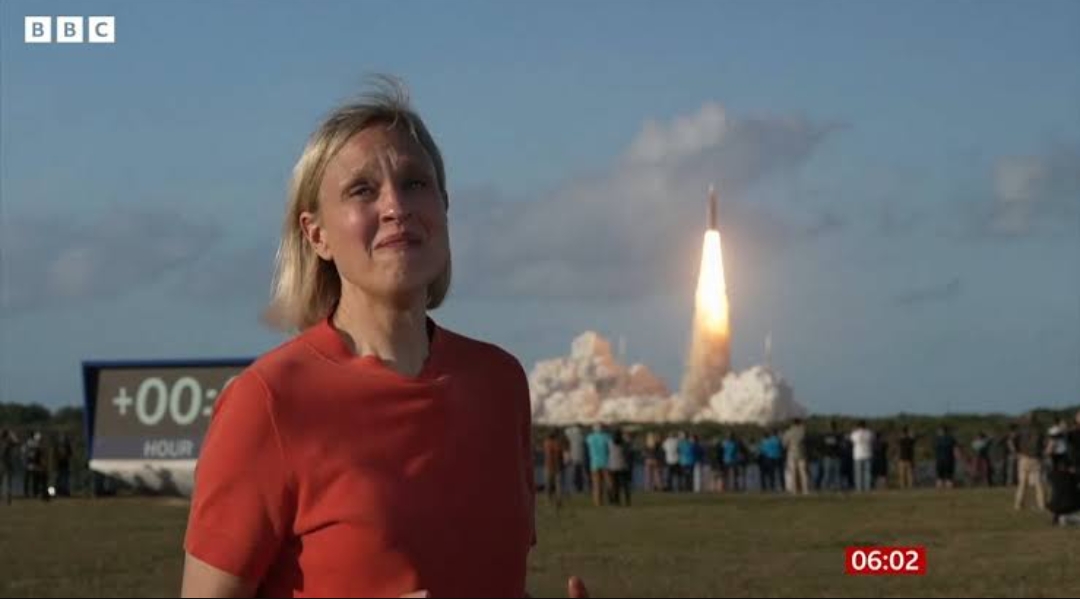
Rebecca Morelle is a prominent British journalist who serves as a Science Correspondent for BBC News. Since joining the BBC in 2006, she has become a recognizable face in global science reporting, delivering complex scientific breakthroughs to a general audience across television, radio, and digital platforms.
She is highly regarded for her extensive coverage of space exploration and environmental issues. Throughout her career, she has reported on major international milestones, including NASA’s Perseverance rover landing on Mars, the Rosetta mission’s historic comet landing, and the New Horizons flyby of Pluto. Her work often involves traveling to remote locations, such as Antarctica and deep-sea research sites, to document climate change and biodiversity firsthand.
Beyond her role as a correspondent, she is a frequent presenter for BBC documentaries and programs like The Science Hour on the BBC World Service. Her academic background is in chemistry, which provides her with a strong technical foundation for interviewing world-leading scientists and breaking down intricate topics such as genomics, physics, and planetary science for the public.
Rebecca Morrell Journalist Wikipedia: Profile Summary
Early Life and Childhood
Rebecca Morelle was born in late 1978 in London, England. Growing up in the vibrant atmosphere of the UK’s capital, she displayed an early affinity for the natural world and how things work. Unlike many journalists who find their way into the field through English or Humanities, Rebecca’s childhood curiosities were rooted firmly in the “hard” sciences.
Her formative years were spent in Hertfordshire, where she attended Goffs School (now known as Goffs Academy) in Cheshunt. It was during her secondary school years that her aptitude for chemistry and physics became undeniable.
Family and Parents
While Rebecca is a public figure, she has maintained a high level of privacy regarding her parents and siblings. It is known that she comes from a supportive British household that encouraged her academic pursuits in the sciences. Her family life in London and Hertfordshire provided the stable foundation she needed to excel in the competitive environment of the University of Oxford.
Education: An Oxford Chemist
Rebecca’s educational background is the secret weapon behind her journalistic credibility. She attended the University of Oxford, one of the most prestigious institutions in the world, where she studied Chemistry.
In July 2001, she graduated with a First Class Honors degree. This is a rare feat at Oxford and signifies a level of academic excellence that allows her to interview world-class researchers as a peer rather than just a reporter.
Career Evolution: The Path to the BBC
The Science Media Centre (2001–2005)
Immediately after her graduation, Rebecca did not jump straight into television. She began her career at the Science Media Centre (SMC), an independent press office that works to ensure that the public has access to the best scientific evidence through the news media. Working as a Senior Press Officer, she learned how the “sausage is made” in newsrooms. She was responsible for helping scientists communicate with journalists during major crises, such as the BSE (Mad Cow Disease) outbreak and debates over genetic engineering.
The Ivan Noble Bursary
In late 2005, Rebecca’s life changed when she became the first-ever recipient of the Ivan Noble Bursary. This bursary was established in memory of the BBC science journalist Ivan Noble, who documented his battle with a brain tumor. This opportunity gave her a foot in the door at the BBC, where her unique blend of scientific expertise and communication skills immediately stood out.
Global Science Correspondent
By 2006, she was a permanent fixture at the BBC. Over the next decade, she rose to the rank of Global Science Correspondent. In this role, she traveled the world to cover:
-
Space Exploration: She reported live on the NASA Perseverance landing on Mars and the European Space Agency’s Rosetta mission.
-
Climate Change: Her reports from Antarctica and the Arctic brought the reality of melting ice caps into the living rooms of millions.
-
Physics: She covered the hunt for the Higgs Boson at CERN.
BBC Science Editor (Current Role)
As of 2026, Rebecca Morelle serves as the Science Editor for BBC News. This is a senior leadership position where she oversees the direction of science coverage across all BBC platforms. She is responsible for deciding which scientific stories are worthy of the headlines and ensuring that the BBC remains a trusted source of information in an era of “fake news” and climate skepticism.
Net Worth and Salary
As a top-tier BBC Editor and a veteran journalist with over 20 years of experience, Rebecca Morelle earns a substantial income.
-
Estimated Salary: While the BBC does not disclose specific salaries for all staff, senior editors typically earn between £100,000 and £150,000 annually.
-
Net Worth: Her estimated net worth as of 2026 is approximately $1.5 million – $2.5 million. This wealth has been accumulated through her long-standing career at the BBC, documentary presentations, and occasional speaking engagements at scientific conferences.
Personal Life: Husband and Relationships
Rebecca Morelle is notoriously private about her romantic life. She does not frequently post about a husband or children on social media, preferring to keep the focus on her professional output. While there has been speculation among fans regarding her marital status, she has never officially confirmed the identity of a partner. She resides in London, where she balances her high-pressure career with a love for the outdoors and travel.
Conclusion
Rebecca Morelle’s journey from an Oxford chemistry lab to the helm of BBC Science is an inspiring blueprint for modern journalism. By combining technical precision with a storyteller’s heart, she has made science accessible, exciting, and—most importantly—trusted. In an age where the world faces unprecedented environmental and technological challenges, her role as Science Editor is more critical than ever. She remains a trailblazer for women in STEM and a global authority in the field of broadcast journalism.
FAQs
Is it Rebecca Morrell or Rebecca Morelle?
The correct spelling is Rebecca Morelle, though she is frequently searched for as Rebecca Morrell.
What did she study at University?
She graduated with a First Class degree in Chemistry from the University of Oxford.
How old is Rebecca Morelle?
She was born in late 1978, making her 47 years old as of 2026.
Is she still at the BBC?
Yes, she is currently the Science Editor for BBC News.
Has she won any awards?
Yes, she was the inaugural recipient of the Ivan Noble Bursary and has received numerous accolades for her science reporting.
Has she traveled to Antarctica?
Yes, she has completed multiple reporting assignments in Antarctica to cover climate change and marine biology.
What is her most famous report?
She is widely known for her live coverage of the Rosetta Comet Landing and the Mars Perseverance Rover.
Does she have a PhD?
No, she holds an undergraduate First Class degree in Chemistry, though her depth of knowledge is often compared to that of a doctoral researcher.
What is her role as Science Editor?
She leads the BBC’s science unit, setting the agenda for how science, health, and environment stories are told.
Where was she born?
She was born and raised in London, England.